

Everyone writes that Arabia’s only story is oil. But there’s a different story.
The song is centuries older, and the thing that wrote it is water:
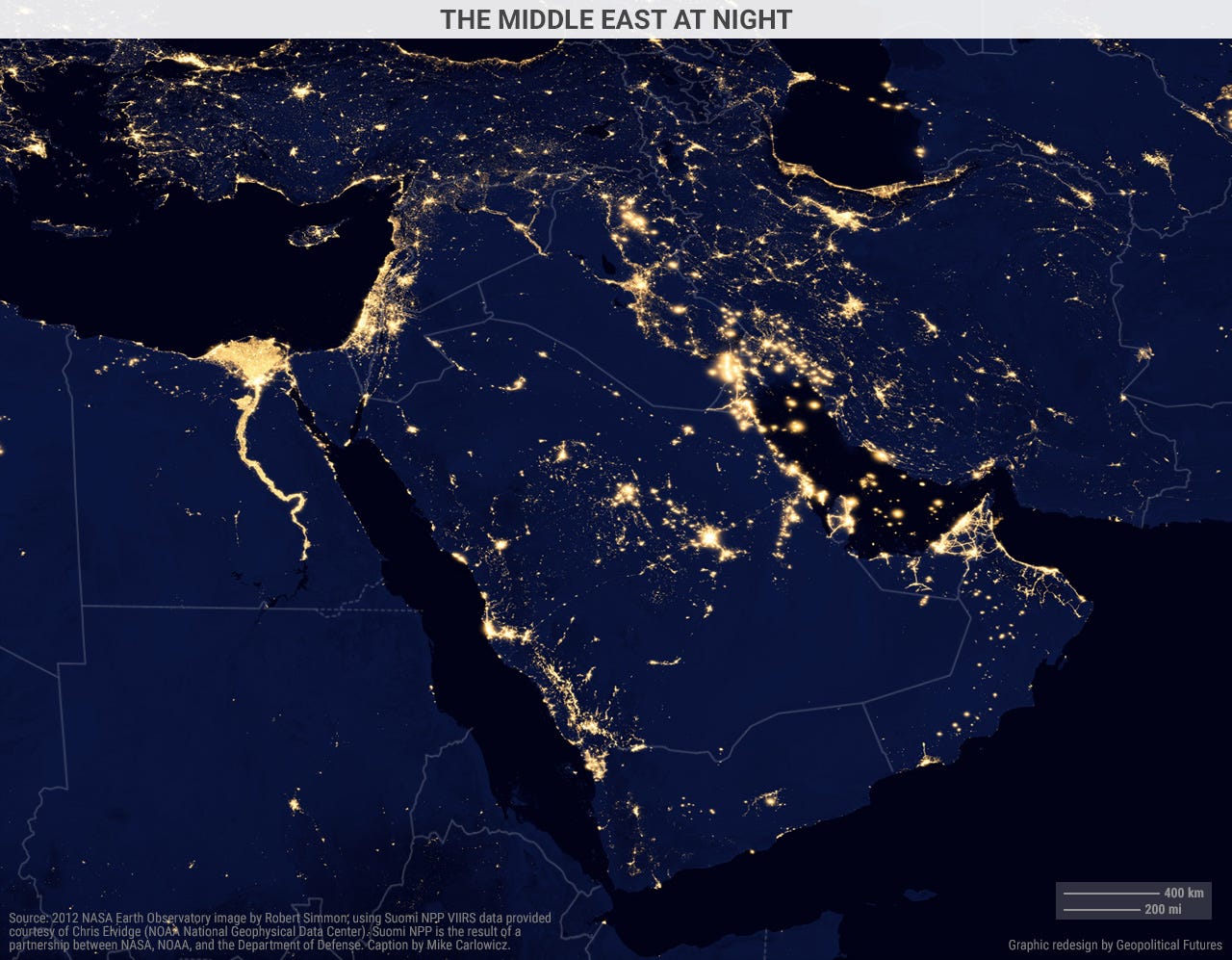
Look at that image for ten seconds. Every bright point sits on water. Every dark stretch is where civilization could not take root.
That pattern is 3,000 years old, and it hasn’t moved by much:
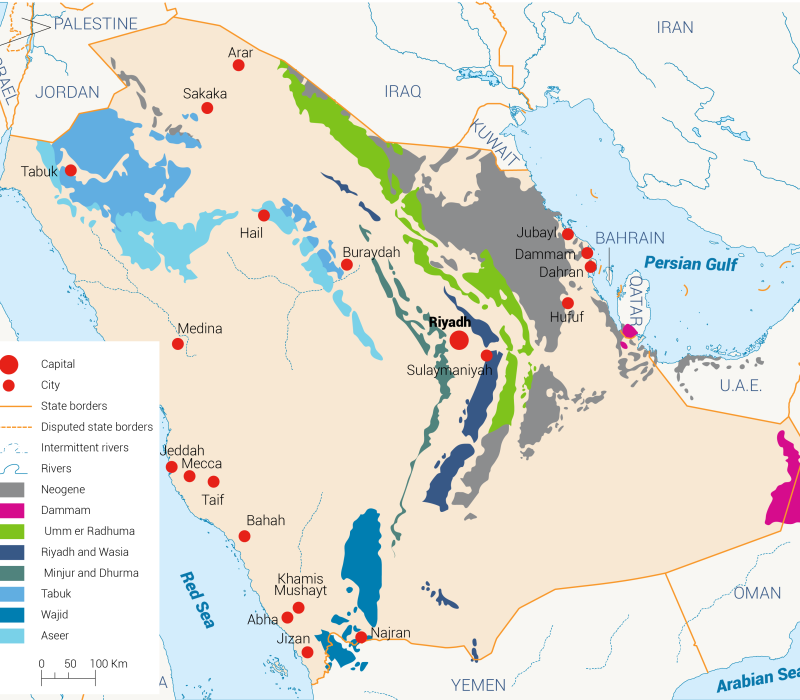
Geography is destiny. Arabia’s destiny was written in the scarcity of water:
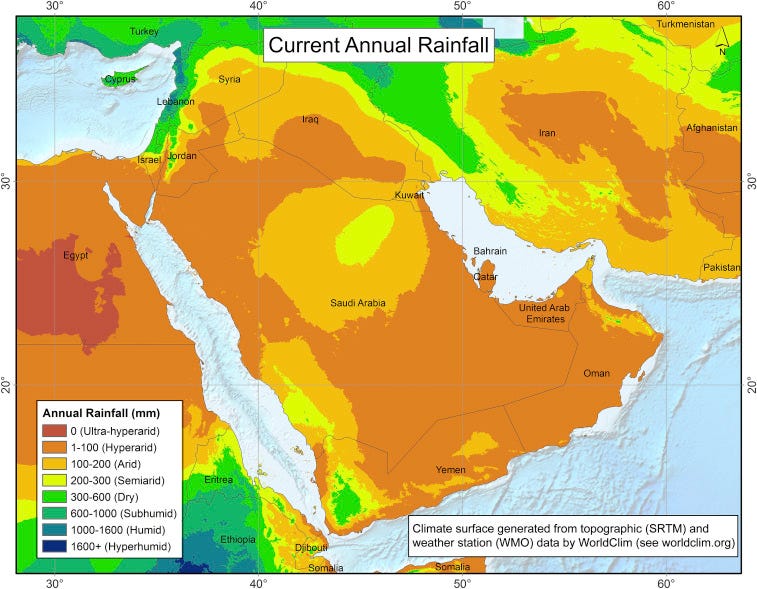
But it is that absence that built a civilization. Then it encoded a mentality — one that outlived the conquests, outlived the caliphate, and is still running every crisis you read about today.
This is the Song of Oil and Water. Let me play it from the beginning. But we need to begin with were it all begins. With water.
The bottom of this article may get cut off in some email clients. Read the full piece here.
1. Civilizations got a river. The Gulf Got dots of water.
Look at any ancient civilization that produced a massive state, and you find a line of water underneath it:
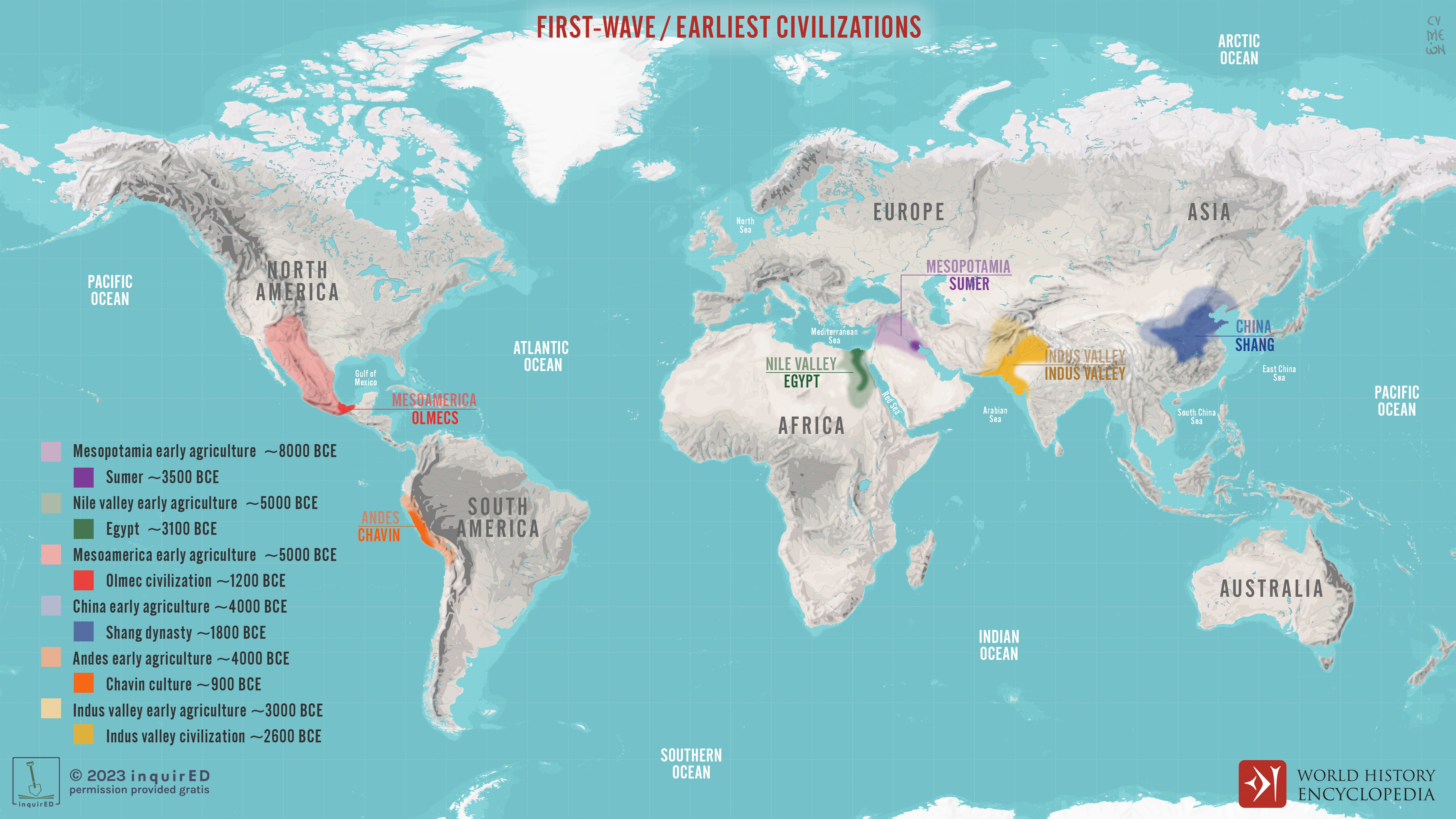
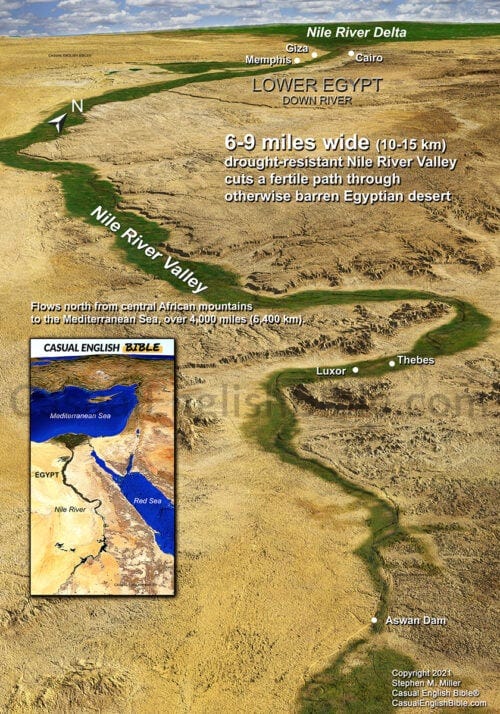
Egypt had the Nile. Mesopotamia had the Tigris and the Euphrates. India had the Indus. China had the Yellow River.
This fact persists even 1000 years later. Control of major waterways builds civilizations, empires, and great powers:
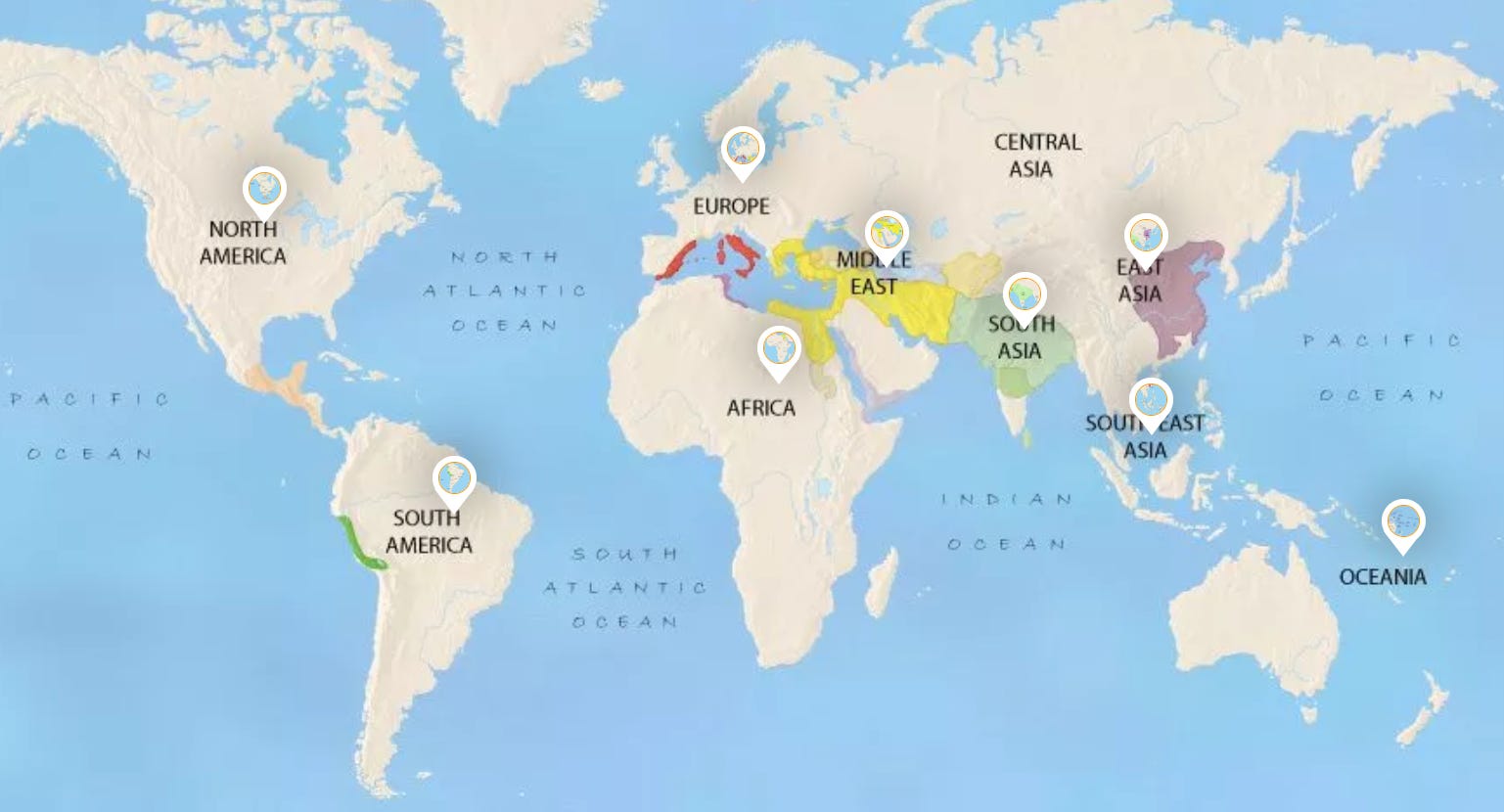
The line of water does something specific. It supports a continuous belt of farms, and a continuous belt of farms produces a harvest big enough to tax.
Like Egypt:
Or Mesopotamia:
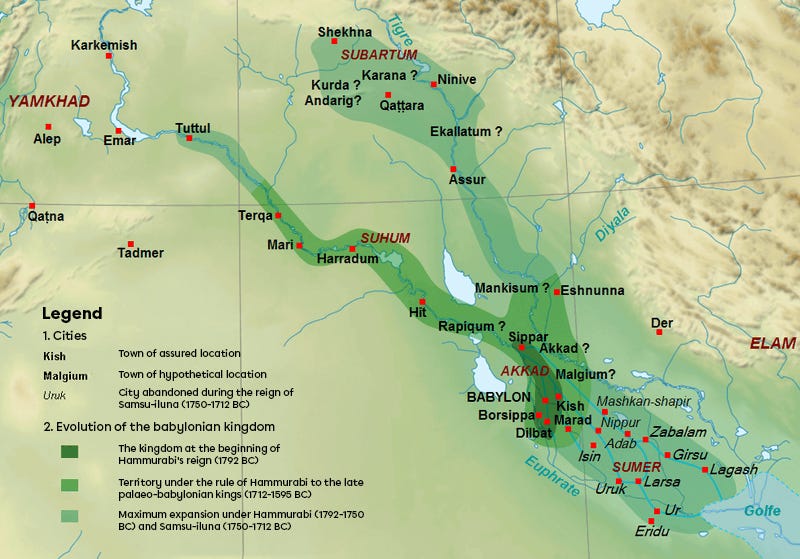
Flowing water means large agriculture, surplus population, and a robust tax base. Tax the harvest and people, and you can pay for specialization of labor. That’s officials, scribes, priests, and soldiers who grow no food of their own. Every ancient state on earth was built on that trick.
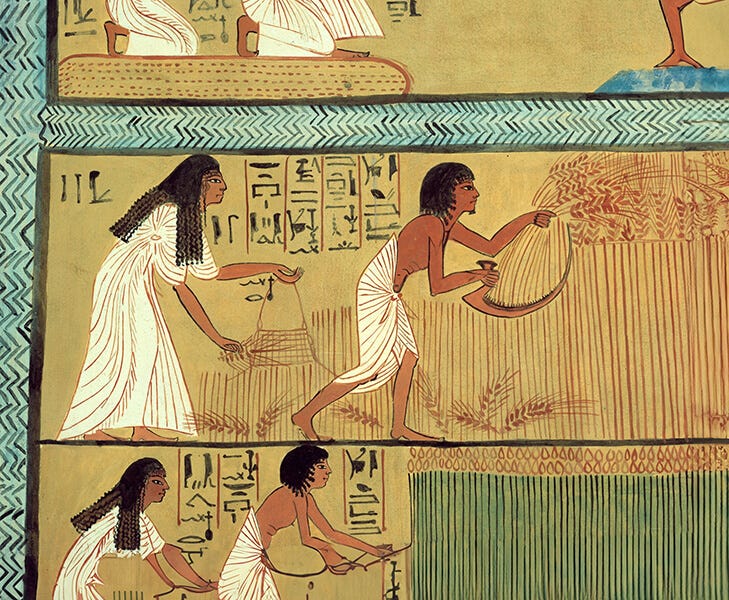
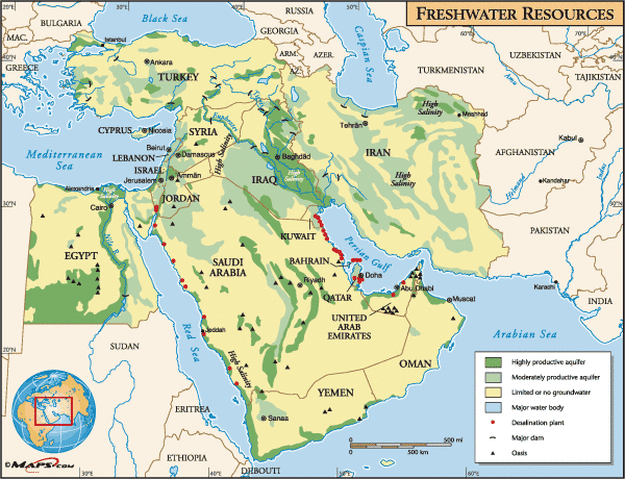
The Arabian peninsula never had that line, where a river could feed fertile fields. Nor did it have a climate that could support water-intensive agriculture:
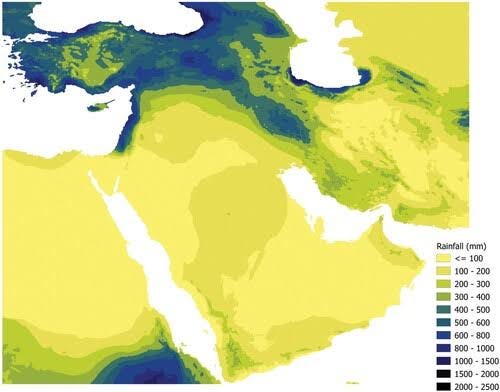
It could only rely on oasis or ground water from well springs:
Rainfall is scarce too even where there are rivers or oases:
Riyadh averages around 90 mm of rain a year.
Qatar gets about 75 mm — and loses roughly 2,000 mm to evaporation. The sun steals back 27 times what the sky delivers.
The Empty Quarter gets under 50 mm, and much of it goes twelve months or more without a drop. What little falls arrives in one or two winter storms before the sky closes again.
London gets more than six times this level of rain for most of these.
Can you build a state on 50mm?
Its not possible. You cannot grow a surplus, feed a standing army, or support a large bureaucracy that sustains large civilizations like Egypt, Babylon, or Persia.
A desert civilization dependent on oases, seasonal rivers, and ground water sources. can do none of that. But that didn’t mean that culture or people didn’t organize. They did.
The dots of water carried fishing villages, pearling towns, and date groves. Supporting a tribal civilization was possible, but nothing that could tax its way into an organized government.
For millennia, that was the ceiling. Every population that tried to grow past what the nearest water source could carry had three options:
Die. Generations of settlements went this way during climate shifts or when trade routes bypassed them, and nobody wrote down their names.
Move. Pick up the tent, cross the dry space. Live a roving lifestyle where you move from dot to dot, hoping no one claimed it. Or you have allies at that oasis or spring. Bedouin and early Arabian tribes lived this lifestyle.
Raid. Take the dot someone else had already claimed. Or, if you had enough force, take the dot itself entirely.
All three describe the basic economic and historical dynamics of pre-Islamic conquest and most of pre-modern Arabia.
Which leads to a rule British historian Arnold Toynbee wrote in his Study of History:
- Arnold Toynbee
Basically in 21st century speech: we are shaped by our challenges. And how we respond as group to challenge shapes our mindset and culture.
But Arabia wasn’t limited to these three options dictated by scarcity.
As you’ll see, people on the Arabian peninsula eventually found fourth option. It was securing that line of isolated dots of fishing villages, springs, and oases into a line.