

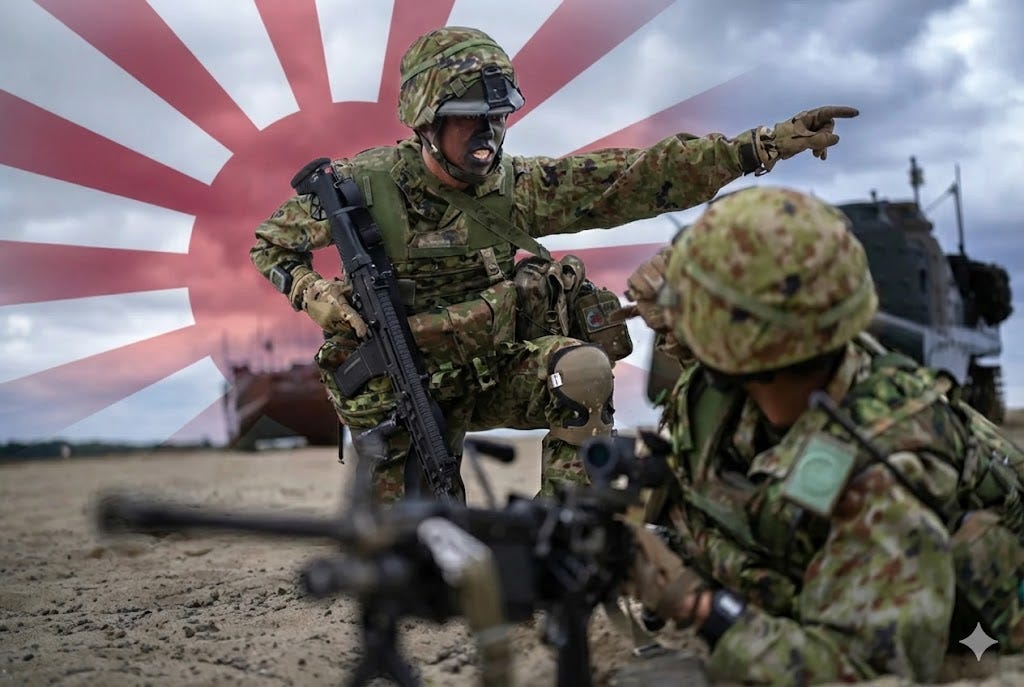
Japan has entered a new era of geopolitical resolve.
After her landslide victory in February’s snap election, Prime Minister Sanae Takaichi has shifted the national conversation on an important part of the Japanese Constitution.
In the devastating aftermath of the Pacific War, a defeated and devastated Japan wrote the 1947 Peace Constitution. In it, Article 9, a no-war clause was enshrined as the defining principle of a nation that vowed never to repeat the horrors of militarism
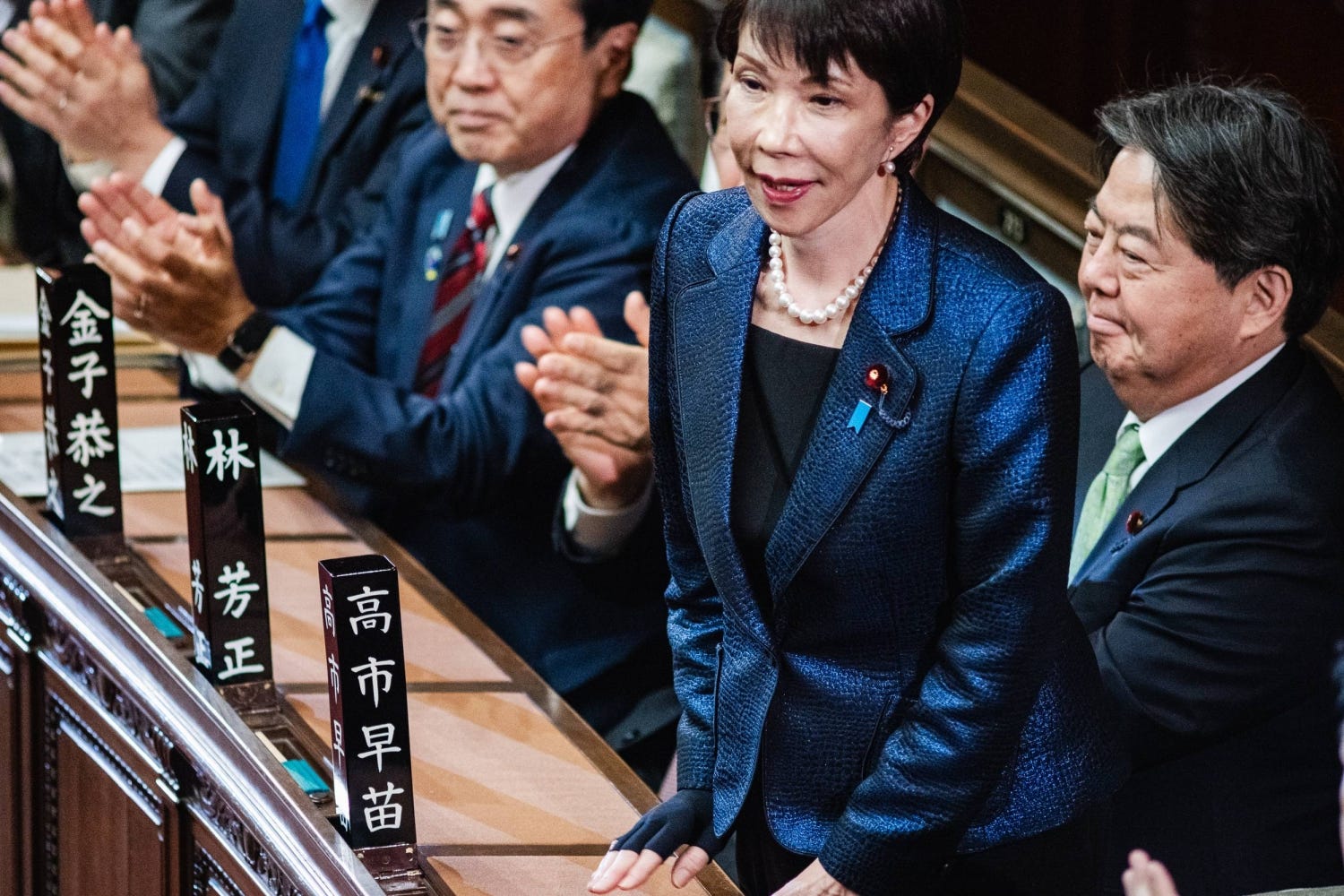
Prime Minister Takaichi's recent victory with a hawkish coalition partner has given her the mandate to challenge the dynamics and reinterpret Article 9. Shifting the Japanese military from a civil defense force to a more active military force.
So this week, we’re unpacking what a Japanese rearmament may look like. And the challenges it faces:
Has anyone tried to revise Article 9 before?
Ending the permission slip military
What does the Takaichi Mandate mean?
What does a (potential) rearmament look like then?
International and Regional Implications.
How does everyone else in the region react then?
Let’s break it down a bit.
The bottom of this article could be cut off in some email clients. Read the full article, unbroken here.
1. Has anyone tried to revise Article 9?
Oh, absolutely. This isn’t new. The ground just shifted. The Liberal Democratic Party has wanted to revise Article 9 since it was founded in 1955. And they’ve tried plenty of workarounds.
The first major push came in 1957 from Prime Minister Nobusuke Kishi (Shinzo Abe’s grandfather!), who argued that even nukes might be okay “within self-defense limits.” The reaction was protests and riot police. Kishi attempted to get around Article 9 using the U.S.-Japan Security Treaty (Anpo Treaty) to force Japan into a mutual defense role.
If Japan was required to defend its ally, it would legally necessitate a formal military, making the "no war potential" clause of Article 9 irrelevant.
Protesters viewed it as a tactical move to bypass Article 9. Eventually he was forced to resign after massive pressure.
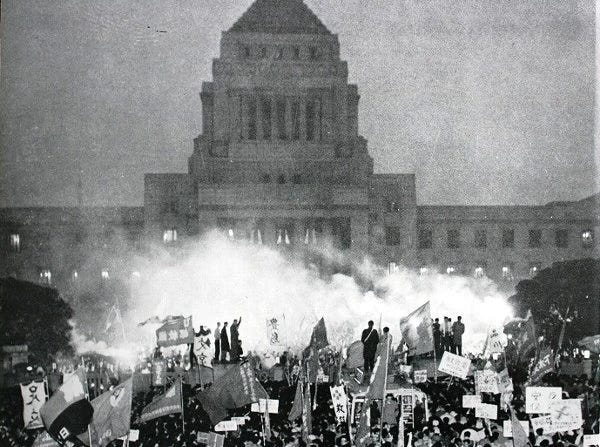
That first attempt went about as well as you’d expect. The Anpo Treaty debate turned discussions on Article 9 in into political poison for twenty years as Japan recovered and prospered in the 1960s and the 1980s Bubble Economy.
The first break came in 1992, when they stopped trying to amend anything and just passed a law letting the Self-Defense Forces go overseas for peacekeeping. Workaround number one.
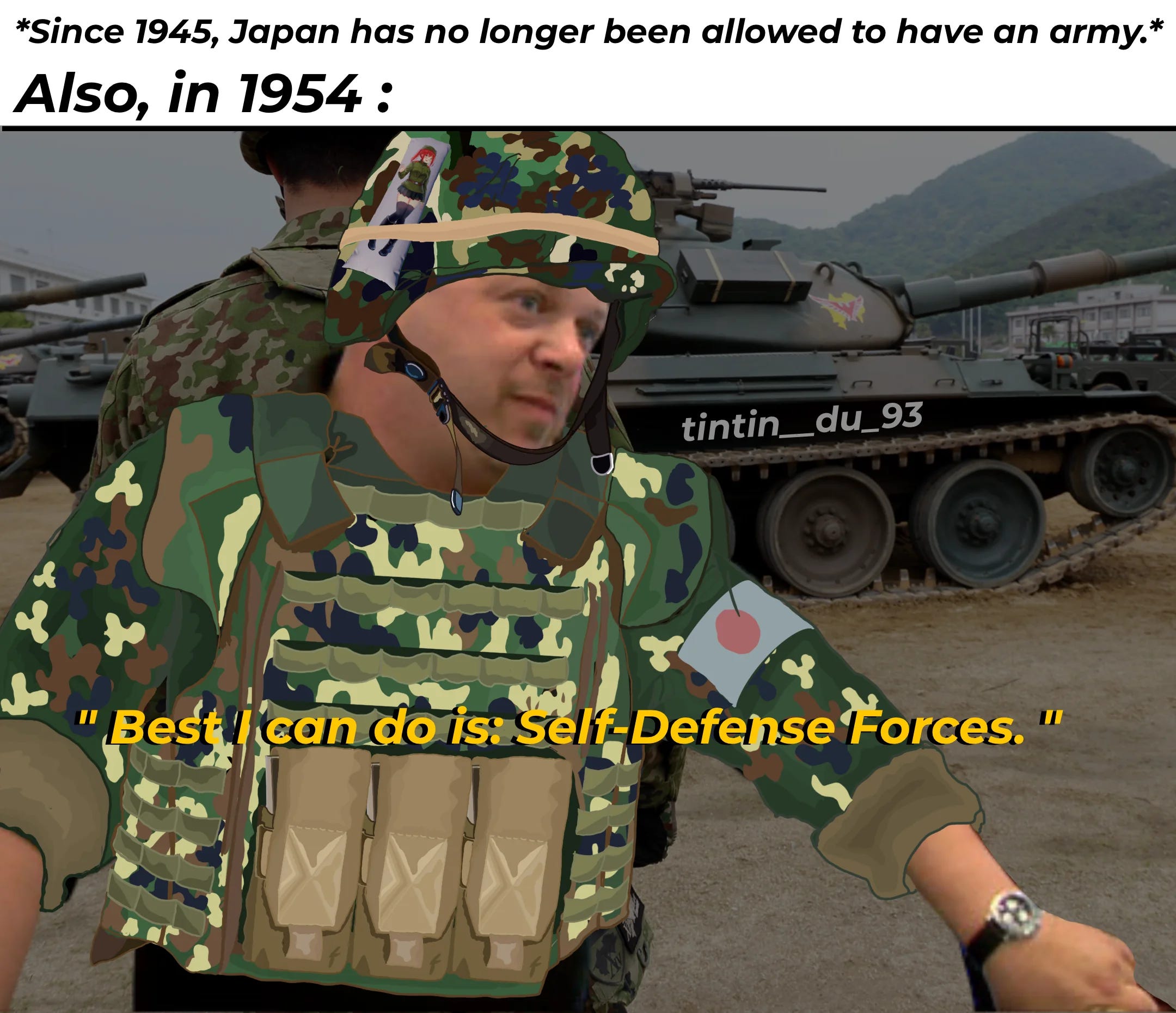
Shinzo Abe made revision his whole identity, pushing drafts in 2005 and 2012. The 2012 version was particularly aggressive.
It proposed deleting Article 9’s second paragraph and establishing a “National Defense Force” that could theoretically do whatever it wanted. But the math never worked. Their coalition partner Komeito kept hitting the brakes, playing pacifist conscience to the government. And public opinion wasn’t quite there.
So yes, people have been trying for seventy years. They’ve pushed, failed, found side doors, reinterpreted, chipped away. What’s different now is they finally have the mandate and a willing coalition partner. As we’re about to see.
