

👋 Welcome to a 🔒 subscriber-only edition🔒 of my Learn Strategy series: Learn Strategy Plus. Each edition goes in deeper into strategy and tactical basics, without all the jargon.
Is it possible to win without fighting?
Winning without fighting is a very famous line from Sunzi’s Art of War. And has varying interpretations. Here’s the original quote:
百戰百勝,非善之善者也;不戰而屈人之兵,善之善者也。
Winning a hundred battles is not the "best of the best"; subduing the enemy's army without a battle is the "best of the best."
It can be vague. So there’s so much debate I find (even in China, Japan, and Korea) about what it even means.
Some say it’s do nothing and win. Others say it is avoiding fighting altogether. While some think it’s only outmaneuvering an opponent. Some people, not wanting to investigate, write it off as mysterious orientalism or complete nonsense.
But how do you really win without fighting?
The secret lies in observation and orientation. And for that let’s use another well-known method to strategists and tacticians:
The OODA Loop.
The bottom of this article could be cut off in some email clients. Read the full article, unbroken here.
What is the OODA Loop anyways?
Originally designed for air-to-air combat, his framework has since become a cornerstone for decision-making in business, sports, and emergency management.
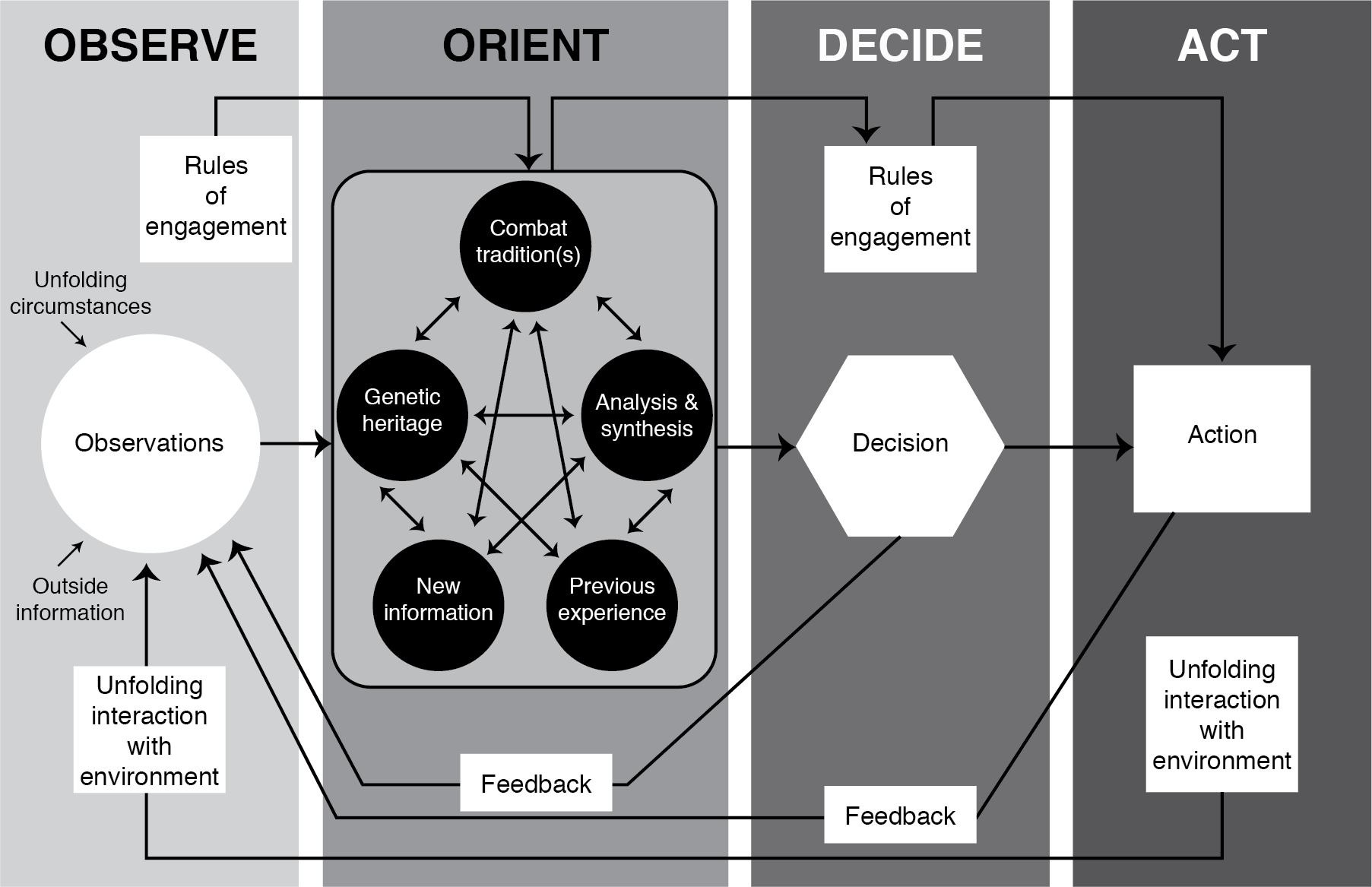
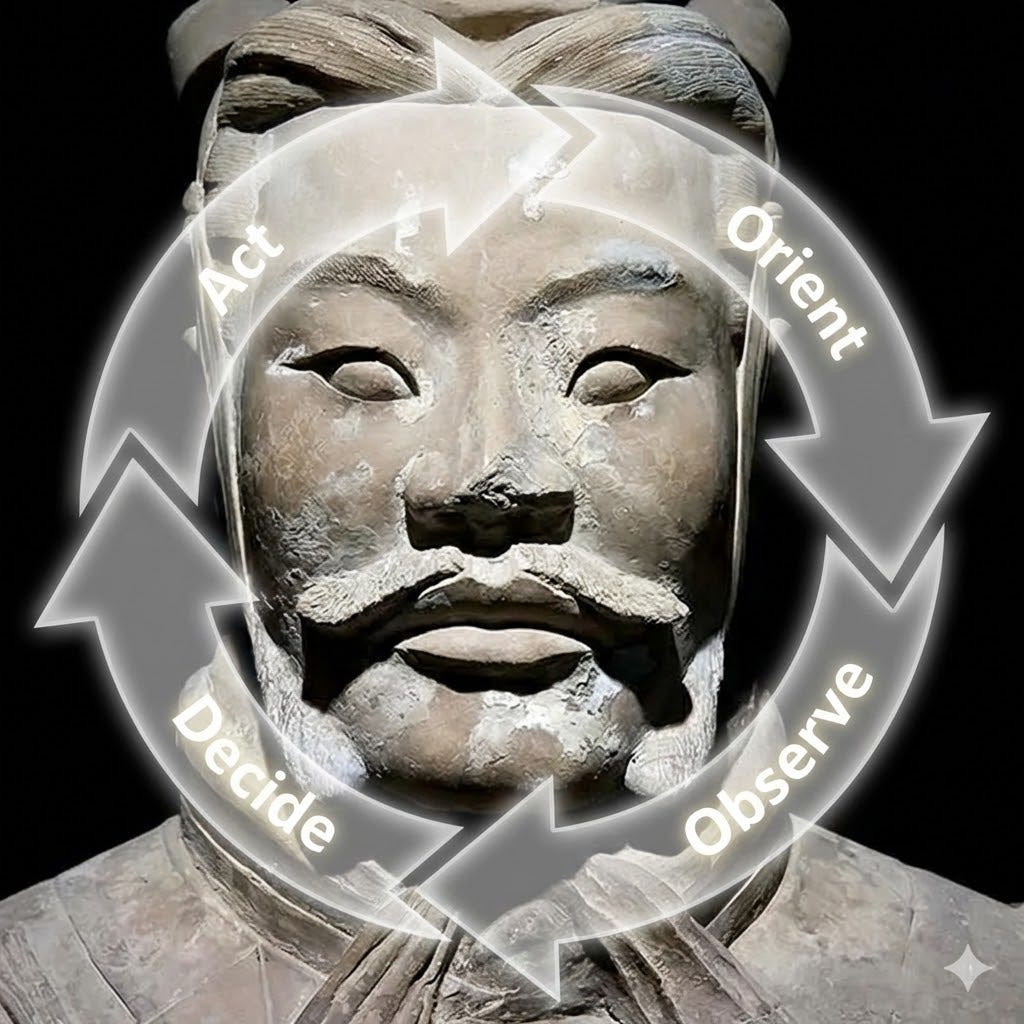
But I’d like to keep it simple for Learn Strategy readers. Its centered around these generally these four phases:
Observe. Collect raw data and information from your environment to identify changes and emerging threats. This stage requires keeping an open mind to see situation as it truly is, not as you expect it to be.
Orient. Filter and interpret your observations based on your experiences, culture, and existing knowledge. This is the most critical phase because it shapes your mental model and determines how you perceive the reality of the challenge.
Decide. Formulate a plan or choose a specific course of action based on your mental orientation. This step involves weighing potential outcomes and selecting the strategy most likely to succeed in the current context.
Act. Execute your chosen decision and immediately begin monitoring the results to start the cycle over again. The goal is to act faster than your opponent can react, effectively “resetting” their own loop and maintaining the initiative.
The main phases where “win without fighting” happens is in the observe and orient phases.
It is essential to shape the opponent in these phases to defeat themselves by mistakes and false assumptions. Then pressure, occupy advantageous space, or even attack the openings they create.
That is the essence of the phrase “Win without fighting”.
It is to scramble their perception of reality at the adversary’s internal clock and decision-making. It is not destruction first. It is the strangling and paralysis of their resources, decision-making, and strategic will.
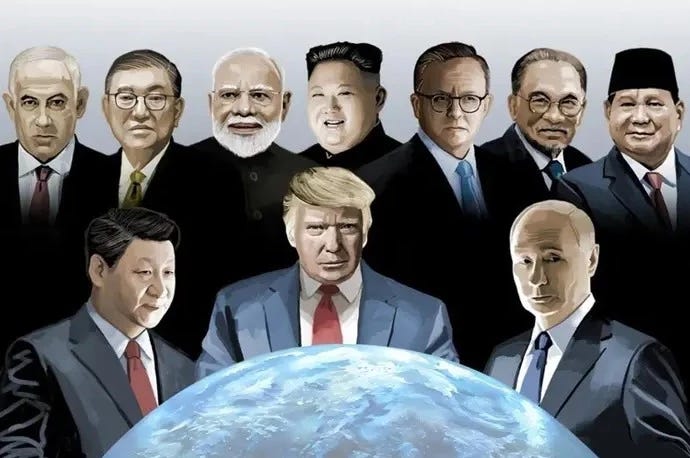
In politics, this is architecture of constructive ambiguity and controlling a narrative. You force your rival to expend political capital.
In business this is disrupting an established equilibrium. You defeat them by making their entire biz model a monument to the past.
In daily life this is preservation of emotional sovereignty. You become a mirror, and dictate the pace of an interaction, and the pace of your boundaries, and gain respect.
But this leads to another question and a pragmatic one:
How do you jam the loop?
A rule I tell my mentee to win without fighting, means you must jam the opponent higher up the chain.
Defeating them before they get to the act stage is just as important. Yes, winning without fighting means locking the opponent in a recursive loop.
You need to think of it as a chain:
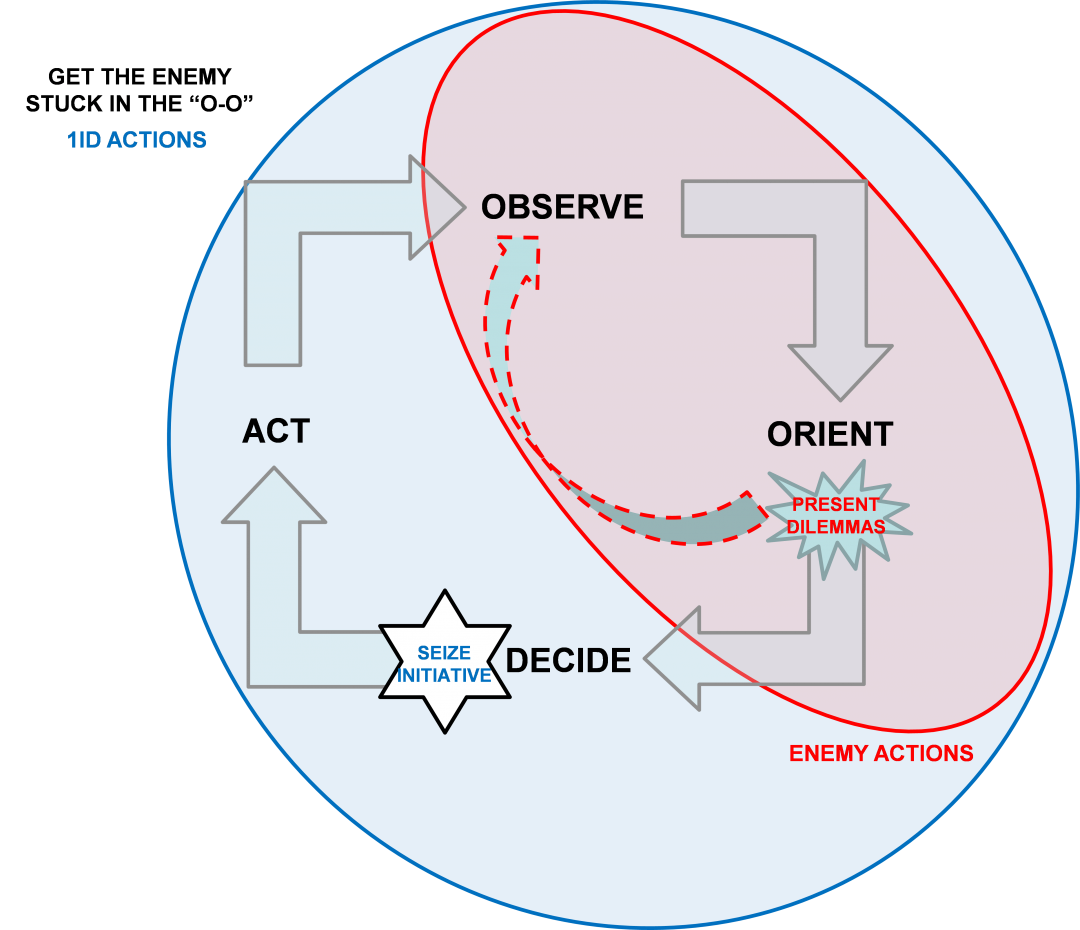
Observation shapes how an opponent orients. Orientation shapes how they decide and act. So you get them stuck there, perpetually burning energy, buying time or space.
What I mean is that it is far superior to defeat an opponent at the observation phase, or even the orientation phase, over the decision and acting phase.
But great strategists defeat the opponents by jamming them at the observation phase….
