

Bryan Mound sits off a two-lane road outside Freeport, Texas. From the shoulder you see pipes standing up out of the grass and the tops of a few tanks.
Under that lot sit hundreds of millions of barrels of crude, stored in salt caverns hollowed out of the coastal domes. Presidents use that oil in a crisis the way they reach for a carrier group.
It’s not flashy, but it is a geopolitical tool as important as the military.
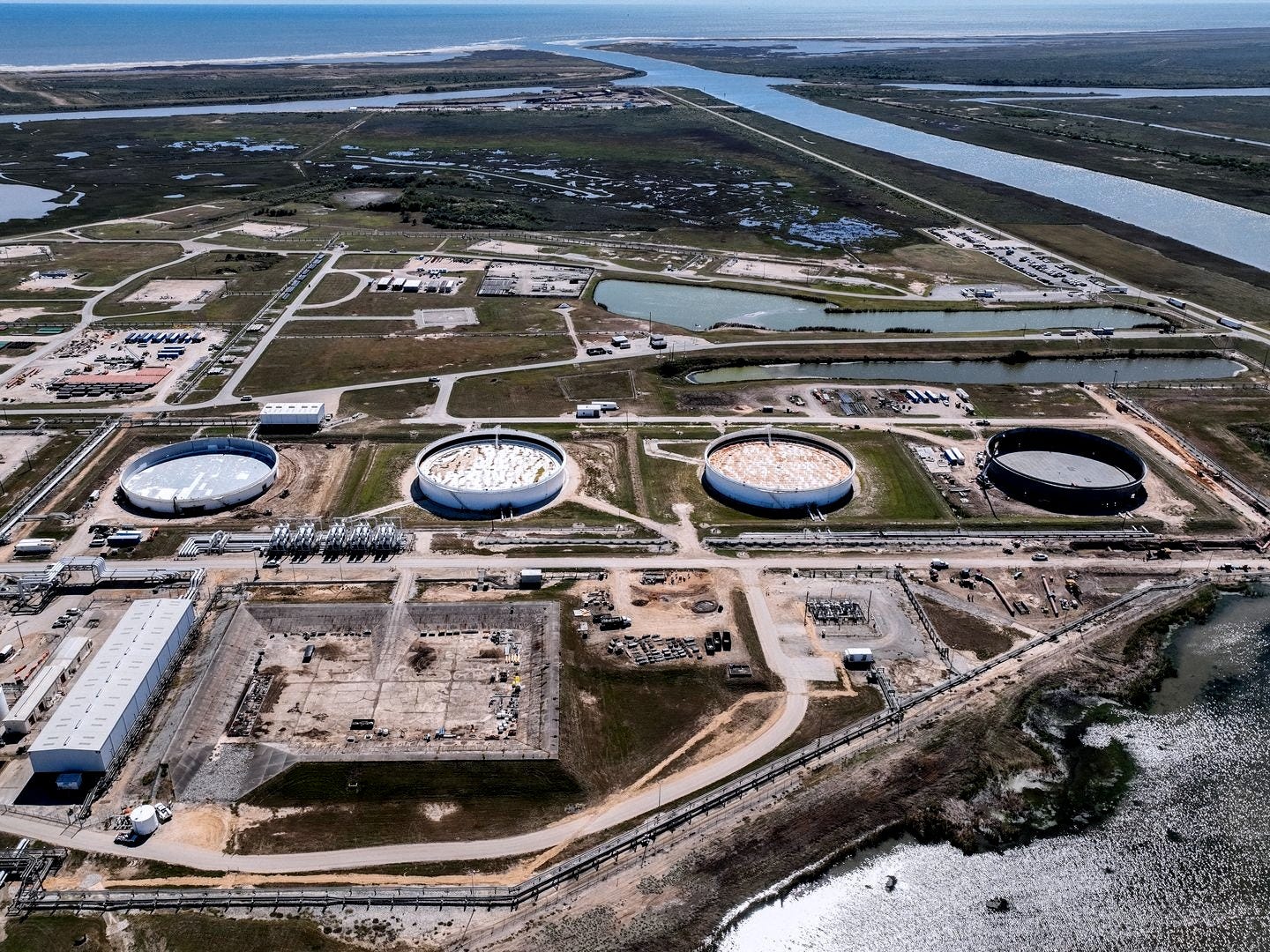
Washington calls it the Strategic Petroleum Reserve.
But the US is not the only one:
China sits on about 1.4 billion barrels.
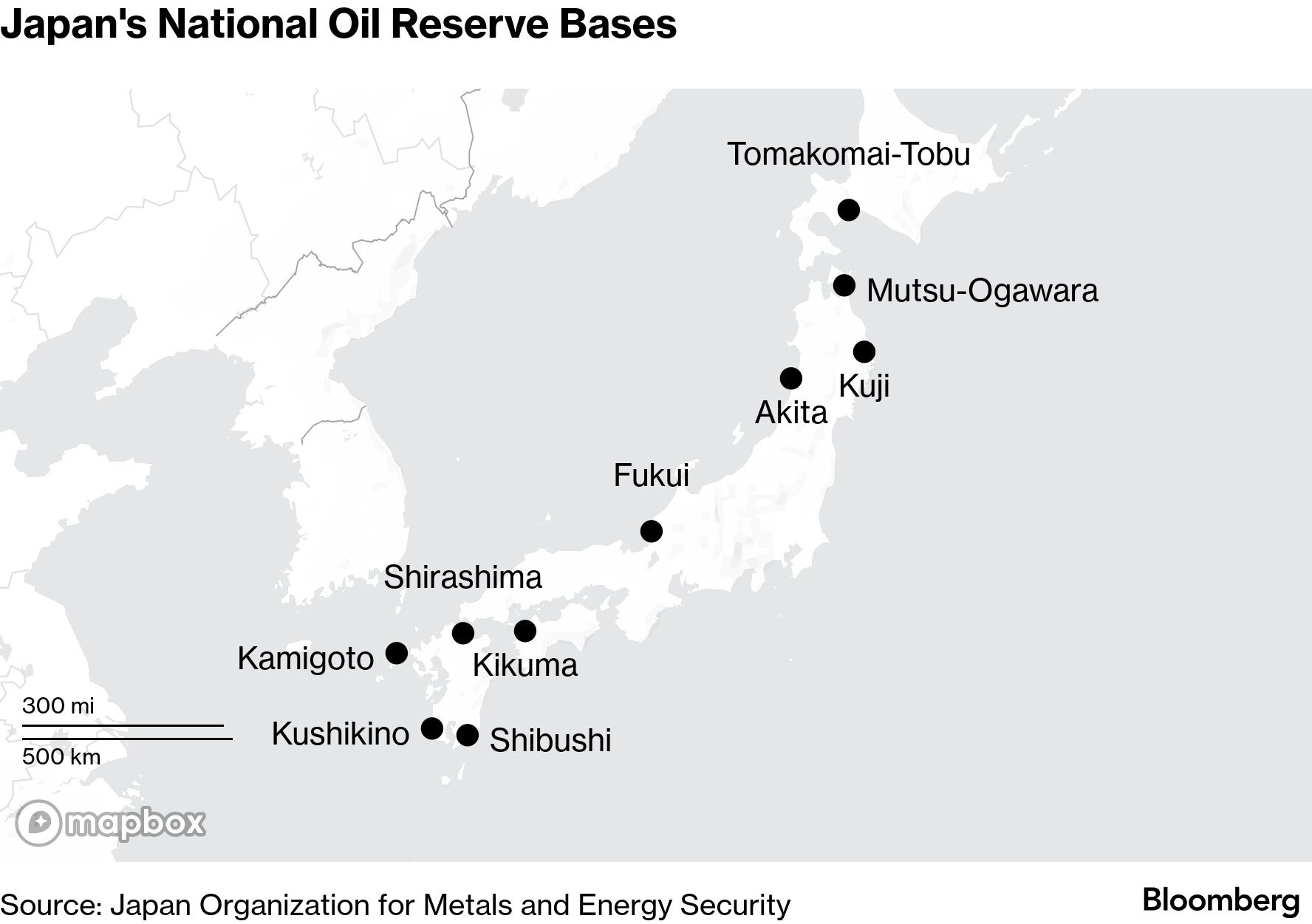
Japan’s holds 263 million.
Saudi Arabia keeps 82 million barrels in the ground.
Each of these governments buys crude at market price and leaves it sitting for years, paying for oil they have no intention of selling.
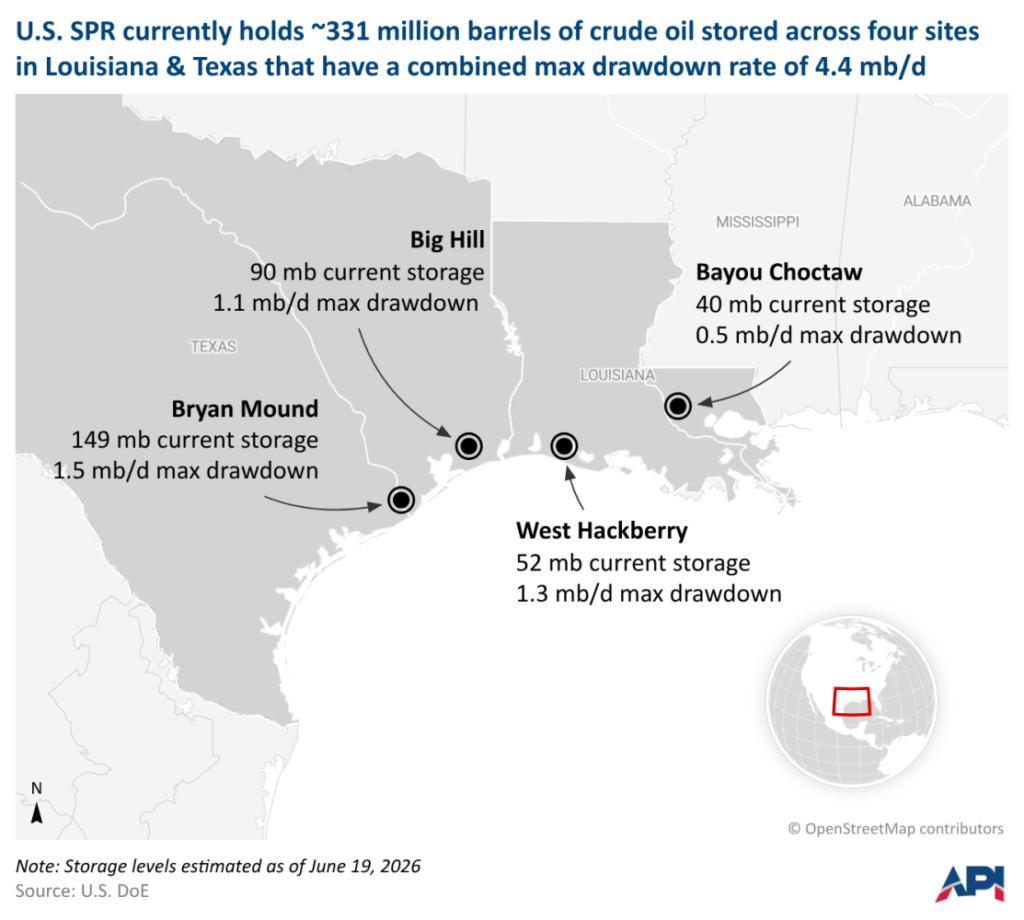
The US has an extensive network:
So does Japan:
But why would they bury so much valuable black gold under the ground? But that is the point of a strategic petroleum reserve.
A strategic petroleum reserve is a geopolitical risk management tool. It gives an important factor to governments: optionality.
What an SPR really buys is time for a country to strategize, hedge, and maneuver to keep its geopolitical edge.
To answer that, we must understand the details of the hack and its consequences. I want to start instead with definitions first, the model, and then why nations would keep an SPR in the first place.
The bottom of this article could be cut off in some email clients. Read the full article, unbroken here.
First, the Vocabulary
There’s a lot of confusing terms related to strategic reserve petroleum reserves. Many get thrown around without definitions. But the basic idea is related to storage, political dynamics, and geopolitical organizations that support nations with an SPR.
So it’s best to give you an illustration. Quick pass, then we build:
SPR (Strategic Petroleum Reserve): government-owned oil, stored underground, off-limits until the government says sell.
Barrel: 42 gallons. About eight fill-ups for a car.
Crude: raw oil straight out of the ground. Most reserves hold this.
Product: what a refinery turns crude into. Gasoline, diesel, jet fuel.
Salt dome: an underground salt pillar, hollowed out with water. Where America keeps its reserve.
Net imports: oil a country buys from abroad minus what it sells. The 90-day rule is measured against this.
Cartel: sellers who agree to hold supply back so prices stay high. In oil, that’s OPEC, founded in 1960.
Embargo: refusing to sell to one buyer at any price. Harder to answer than a price hike.
IEA: the buyers’ club, founded 1974. Thirty-two wealthy importers, each holding 90 days of net imports.
Collective action: the unanimous vote that triggers a coordinated release. Six in 52 years.
While these aren’t all terms, they’re used pretty often. And you’ll see them more later on. But what’s the model that a SPR is based on?
Power Belongs to those who Wait
The hard fact in a geopolitical standoff: the side that runs out of options first loses. This is consistent from military sieges to trade wars. The side with the more resources buys optionality. Optionality buys bargaining power.
The same rule goes for energy crises. And an SPR gives that optionality:

Bartering power here is a buffer here. If you’re against an oil producing nation, your leverage and bargaining power is greater when don’t rely on the next cargo. Or a sudden drop in oil inventory.
A government with 90 days of crude oil can mitigate a price spike, production cut, and refuse terms that would be unfavorable to it. Take that away, and leverage shifts to the producers or whatever geopolitical actor is preventing oil from getting through.
They key concept here is that optionality and expanded strategic breadth is the point of a Strategic Petroleum Reserve. To maintain freedom of action, an SPR must exist. But are there the specific types of freedom does it give to nations?
1. Diplomacy: The Right to Say No
The ability to say ‘no’ outright is a superpower in international diplomacy. It means you belong to a select club: one with more resources, but also a framework help cover you.
In the case of oil, this means a network like the International Energy Agency (IEA) that sets rules and standards. Members act like sort of a sort of union, acting together and making each country’s SPR effectively the whole membership’s SPR. A producer or bad actor trying to squeeze one finds they’re squeezing them all at once.
But this wasn’t always the case. We have to look back to 1973: the Yom Kippur War.
